Ingredients
Equipment
Method
- Make the syrup first. Put the sugar, water and cardamom in a saucepan and bring to a boil, stirring until the sugar dissolves. Simmer for 5 minutes, then add the saffron, rose water and lemon juice. Keep it warm on the lowest heat.
- In a bowl, mix the milk powder, flour and baking soda. Add the melted ghee and rub it in with your fingertips.
- Add the warm milk a little at a time and gently bring it together into a soft, slightly sticky dough. Do not knead it like bread; overworking makes hard jamun. Cover and rest for 5 minutes.
- Grease your palms with ghee and roll the dough into 16 small, smooth balls with no cracks. They will double in size, so keep them small (about 3/4 inch / 2 cm).
- Heat the oil in a deep pan over low heat to about 300°F (150°C). A small piece of dough should sink, then rise slowly with gentle bubbles. If the oil is too hot, the outside browns before the inside cooks.
- Fry the balls in batches, gently moving the oil around them with a spoon rather than touching them, for 6 to 8 minutes until evenly deep golden brown.
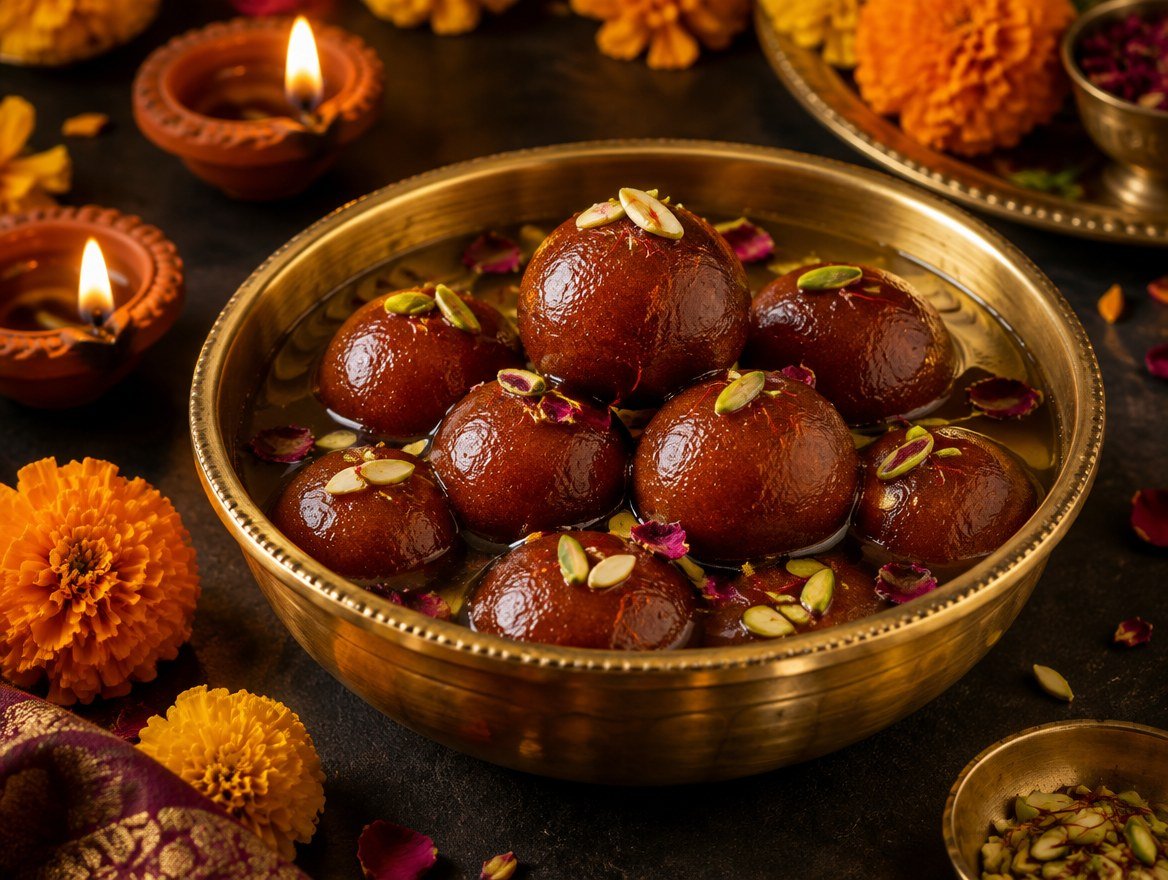
- Lift them out with a slotted spoon, let them cool for 30 seconds, then drop them into the warm (not boiling) syrup. Soak for at least 1 hour, until soft and swollen. Garnish with pistachios and serve warm or at room temperature.
Notes
Make ahead: gulab jamun keep in their syrup in the fridge for up to 5 days. Warm them in the microwave for 20 to 30 seconds before serving.
Troubleshooting: if they crack while frying, the dough needs a few more drops of milk. If they are hard in the middle, the oil was too hot or the dough was kneaded too much.
Serve with: a scoop of vanilla ice cream, or as part of a Diwali sweet plate with kaju katli and besan ladoo.
Outside India: full-fat milk powder (sometimes sold as whole milk powder or dry whole milk) is in most supermarkets near the baking supplies, and in Indian and Asian stores.